14 things we run behind

At any given time, everyone of us is driven by or running behind one of these 14 aspects of living. Each stair is climbed by every single individual. Some passthrough quickly and other camp in some of these stages for a longer time. But, eventually, everyone identifies the pattern and moves on.

(essential need)
1.) When the life is at risk, none of the other things matter. All living beings run towards self-preservation. Despite the need for sleep, thirst and hunger, they try with all their energy to preserve the life in the body.
2.) When one feels safe, the body wants to rejuvenate. sleep kicks in. When one feels sleepy, neither hunger not thirst matters.
3.) A well rested body seeks nourishment. Food and water.

(need to desire)
4.) Once the bodily needs are met, mind gets active. Senses become alive and seeks to be pleased. Still people can seek food, but this time it'll be for taste. Cuisines, entertainment, alcohol, sports, clubs, spas cater to this layer.

(desire to pride)
5.) Once the base desires are fulfilled satisfactorily, desire to be appreciated arises. Comparison with others, drive to acquire more knowledge and skills, enhance the looks, shop brands are all the outcome of this simple desire to be appreciated by the people around us.

(pride culminates)
6.) Once we are saturated with the accolades, some more superficial desires kick-in. To acquire more wealth just for the sake of wealth, though there is no desire to spend it. It also drives one to run behind fame, rationing the natural resources, spatial exploration, rearchitecting the social order and several such activities with global impact.

(aligning physique with the nature)
7.) The clutch of needs, desire and pride starts loosing its grip. The person is blessed and also driven to attain robust health. Gets more conscious about intake and activities. Driven to get more harmonious with nature, physically.

(turning inwards)
8.) When the physical health and strength reaches acceptable levels, we start gravitating towards superior psyche. Strengthening the mind. Mental strength of a person is hidden in plain-sight. Its their breath. A steady breath is the sign of a strong mind.

(seeking begins)
9.) Combination of physical and mental strength ultimately drives a person towards inertness. Such people don't give-in to the common vicissitudes of the masses and utterly bored with common excitements but are curious about mundane things which are commonly considered boring. They are often found doing such things for hours, like staring at the sky, watching sunset, sleeping in a seated posture or consciously practicing to meditate.

The above mentioned 9 stages are applicable to all the life forms. The next 5 stages are only applicable to the humans and higher forms of the species.

(meditation)
10.) Sitting still for extended span of time with erect spine eventually leads to dhyana(m), meditation setting in. It is an inner experience that should not be described. From outside, a person in this state will just look like sleeping, but internally, the whole universe opens up.

(yoga)
11.) After several such involuntary experiences of dhyana(m), yoga(m) is attained. For an outsider, this person will again look like just sitting and sleeping, but with one significant physical change. The breath would be so shallow and even no breath flowing in and out for several minutes. Breathless is a natural response of the body when the mind is standstill.

(gyan, ஞானம் - wisdom, exhibits clairvoyance)
12.) With ability to be in yoga(m), samadhi, breathless state at will, the person is directly connected to source of absolute truth, wisdom, intelligence and knowledge. There won't be any more questions in such a person's consciousness. All the unnecessary questions and curiosities are dissolved and the essential questions are answered instantaneously.  They roam amongst the masses just to fulfill the orders from the source.

(mukthi, முக்தி - liberation)
13.) This is literally liberation from the cycle of birth and death. The above mentioned 12 stages takes several lifetimes. Once the soul reaches this stage, there are not born again, in any form.

(divine, இறை நிலை)
14.) This is the ultimate goal. Every other driving force mentioned above keeps pushing everyone towards this. There will always be a sense of dissatisfaction and boredom, until this stage is attained. The soul has reached its source and is same as whatever is believed to be god with all the abilities and powers associates with the divine.

ஞானம் - Wisdom


Knowledge, Intellect, Intelligence and Wisdom are poles apart from each other, but are often used interchangeably.

Knowledge is information diligently collected, stored and retrieved appropriately. It is just knowing, raw-data perceived through senses, mostly eyes and ears.

Intellect is a step above raw knowledge. It is a faculty of reasoning and understanding objectively. Beyond knowing, the information is understood clearly, interpreted in multiple angles and the person is able to reason several other scenarios based on this understanding.

Most of our education system is totally built around augmenting knowledge and assessing the intellect. Universities produce a large number of distinguished intellects and well-informed individuals year in year out. But none of the modern universities can produce Einsteins and Picassos; Gates and Jobs; Bufett and Bezos.

நீரளவே யாகுமாம் நீராம்பல் தான்கற்ற
நூலளவே யாகுமாம் நுண்ணறிவு - ஔவையார்
(Water lilly cannot grow beyond the depth of the water;
intellect cannot go beyond the knowledge acquired - Avvaiyar)

Intelligence is the ability to apply the knowledge and intellect to tackle obscure situations with ease. Often, it sprouts out when the mind is cornered and it cannot retrieve anything from the memory. Commonly known as presence of mind.

Unlike knowledge and intellect, intelligence cannot be taught, at least directly. When a person is put through certain situations by choice or chance, their intelligence is exhibited, if exists.

Wisdom is whole different ball game. Wisdom is a clairvoyance with a wholistic perspective of anything and everything essential. It can neither be taught, nor innate but a blessing that is instilled upon the fortunate when their consciousness (சித்தம்) ripens. It doesn't grow gradually, but a sudden shift changes a commoner and brings out a completely new wiseman into existence.

Wisdom in current times is used haphazardly as a superlative of intelligence. Genius and Gifted are still intelligence of much higher amplitude, focused and exhibited very rarely.

விஞ்ஞானம் (Genius) - Perceived information that is not readily available for the five senses. Genius in few branches of science. Nicola Tesla, Newton, Copernicus, Ramanujam are some of the விஞ்ஞானி (Genius).

கலைஞானம் (Gifted) - Skill that is not practiced but uncovered from within. Gifted in any form of art. Mozart, Michelangelo, Balamuralikrishna, Michael Jackson are all gifted artists.

Some rare beings like, Leonardo da Vinci are both genius minds and gifted artists. But wisdom is beyond mind and such rare abilities. Wisdom is not settling for anything less. It is to get in par with the creator itself. Hence it is termed as மெய்ஞானம் (truly wise).

மெய்ஞானம் (Wisdom) is complete resonance with all the elements in universe, life forms, cosmos and total dominance over all the 64 art forms (ஆயர்களை 64). Not necessarily exhibited for approval and recognition. Buddha is a மெய்ஞானி (wise), but there is no record of him reciting a poem, singing a song or painting. Socrates, Christ, Thiruvalluvar, thousands of siddhas and rishis are the மெய்ஞானி (real wise). Their identity and influence transcends beyond their bodily form, space and time and is ever existing in the universe.

Wisdom is never self-proclaimed and hence one has to invariably doubt anyone who claims wisdom. It is so conspicuous that it need not be touted. On the contrary, there have been several wisemen who took so much care in hiding their wisdom from the crowd. We are in fortunate times and there are abundant intentions, words and actions of real wisemen around us. It just takes a moment, the right moment, to catch the flame and lighten our lamp.


Am I Spiritual?

Spiritual has become a term that denotes the priests, sages, meditators, idol worshipers, wisdom seekers. Every living being, thriving to explore and improve upon any aspect of their life are all spiritual.

Even those who consider themselves spiritual, feel guilty for not being spiritual enough. This is due to the lack of understanding on spirituality. Being spiritual, is not a choice, but absence of all choices. We are driven to do what we do because of these three unconscious choices;

1.) Sensual Gratification - hedonistic craving and consious effort towards gratifying the senses
2.) Identity crisis - yearningly seeking accolades, recognition and bent on proving self-worth to others
3.) Disturbed conscience - engulfed by vindictive attitude

These are the driving factors that drives the engine of society. The varying amplitude of each of these choices drive us seek different things in life. If not for these three things, we'd all be at peace and complete harmony with the existence.

When the hedonistic crave over-powers; we seek wealth. Day in day out, a vast majority is trying to get rich to fulfill their earthly cravings and in the process they also end-up establish an identity, though it wasn't their primary goal.

When one suffers from identity crisis and hedonistic crave equally; they end up seeking fame. A large part of the herd, seek to become famous and attain celebrity status. A negligible minority attain the celebrity status without trying, due to the sheer love and dedication to their art. They don't fall under this crowd, whose crave is bigger than their love for the art.

When identity crisis overpowers; they seek power - Crave to control others, ruling kingdoms (politics) is 99% due to the identity crisis, often a deep scare left by disrespect and rejection. Here identity crisis takes the upper hand and the epicurean attitude is comparatively minimal. Voluptuary is often the resulting byproduct, but not a direct driving force for seeking power. Again a very minuscule  number of people genuinely want to serve and seek to rule, but the existing political structure ensure they don't get to the top with the same attitude. At least their attitude is killed before they make any progress.

Anyone who is driven to punish another life for whatsoever reason, is suffering from disturbed conscience. Conscience is a sheer accumulation from the social surrounding. Disturbed conscience is the result of a person going through either hostile circumstances or unexposed to the nurturing environment. People with disturbed conscience are commonly termed as psychologically ill. They are consciously or unconsciously seeking revenge for a reasons known or unknown. This doesn't have to be as extreme as seen in media. Every time you punish your kid, ask yourself, why did you do it? I'm sure there will be beautiful selfless decorated justifications like; for his good, to teach her a valuable lesson, to ensure they don't suffer in future, etc. Get past all these, and ask yourself genuinely, what triggered it.

Anyone suffering from one or a combination of these syndromes is a sensualist, commonly termed as a practical person in the current times. Society recognizes, cheers and encourages these sensualists to stay on this course and continue contributing to the economy. Lets say the hedonistic crave overpowers you and you seek wealth. Receding from it superficially won't work. Trying to convince yourself "this is a wild goose chase" cannot get you out. It has to ripen and fall off naturally, until then you'll have to run the race.

Until the impermanence of worldly pleasures are soulfully felt, the state of permanent bliss is just a fiction.

Absence of all these syndromes is the spiritual state. It is a transient state for every living being in this world, even for an enlightened master it is absolutely transient. i.e., we all keep switching between sensual and spiritual states everyday. In a dreamless sleep (susupthi), these sensualist things vanish and we are all spiritualists. In deep sleep, our ego (ahamkara) gets recharged and when we wake up, these sensualist syndromes disconnect us from the center again so that we can continue pursuing the same thing in the morning, that tired us out yesterday.

Hence, everyone trying to evolve is a spiritualist. The difference is only in duration and intensity. When one consciously attempt disconnecting from these syndromes, they evolve spiritually. Stronger the bonds with these syndromes, meeker the attempt and slower the progress.

It is wise for a person in sensual state to stay away from the those who are in a spiritual state. In that state, they cannot be of much help to a sensualist, a common man. To connect back to a sensual person, the spiritual has to step down by choosing one of these three sensual syndromes. Until they do so, they can neither entertain nor guide the other.

Only thing we can do is to carve out a small chunk of time in a day and try to experience the deep sleep, consciously. This might develop a new craving for the experience it provides, but it starts eating away the sensual syndromes, even if those are to be fulfilled to help you transcend. Once it takes you past the threshold, the new craving for spiritualism also evaporates, making one really spiritual.

Upavāś - Fasting (விரதம்)?

Upavāś, விரதம் (viradham), fasting are linguistically unrelated terms, yet, they are used interchangeable in daily use.

Abstaining from food is termed as;
Fasting - means abstinence.
sawm (صوم) in Arabic - also literally means "to abstain".
viradham (விரதம், நோன்பு) - determination to follow something for a specific time. It could be anything, not necessarily abstaining from food.

Upavas - 'upa' means 'to be near' and 'vas' means the abode of divinity. To understand this, we need to get a clarity on what this divinity and its abode is.

Abode of the divine 
This is often thought to be a religious place, presence of a divine being, consecrated object, a remote place in hills and forests. Hence, people travel to such places and try to sit there in the name of upavas. Divine also took abode in every being that is still alive.

உள்ளம் பெருங்கோவில் ஊனுடம்பு ஆலயம் - திருமூலர்
(body is a temple, its life energy is the divinity - thirumoolar)

life-force (prana, பிராணன், உயிர்)
In every living being there is a life-force that exerts its influence throughout the body, but resides in specific location in different states of consciousness. When we are awake and alert, the life-force is centered in-between the eyebrows, hence vermilion (குங்குமம்) is used to cover this place in emotionally vulnerable people. This life-force (prana) is the essential divinity present in every living being. Food (water and air) is இறை (Iṟai) and the life-force that ingests it is இறைவன் (Iṟaivan, Divine). As long as it is in the body, we get the due respect as a person. The moment it leaves, the body is treated like an object.

For any physical and mental activity, the essential fuel is this life-force. Depending on the quality of the air, water and food consumed, there is essentially a gain or loss of life-force. When the consumed substance is closest to its natural form, we get the maximum life-force (prana) from it. Raw grains, fruits, vegetables, milk, wild waters, fresh air are rich in prana. There is a loss of prana with every step of processing these foods like husking, grinding, cooking and boiling. When more prana is spent in digesting the food than what is gained from it, it just clipped off few seconds from your lifetime. It might quench the thirst and hunger, may even provide some nutrition but the loss of prana is definite. This is the ultimate reason for aging (மூப்பு) and eventually the body ends ups lifeless, i.e., all prana depleted.

The life-force reducing things we do with the food, water and air are often justifiable for the situation we choose to live in. We boiled the water to get rid of health deteriorating pathogens in it, started cooking grains as our smaller intestine cannot easily digest them in raw form, but now we do it for the taste we've acquired for the cooked food and cook several vegetables and fruits that we could digest very well in raw form. We do condition the air in densely populated situation to cool it down and disinfect it as well. Thought it becomes necessary to detoxicate the substances we consume, loss of life-force is certain.

Being near to this life-force, i.e., focusing, acknowledging and consciously soaking in its influence is called Upavas (உபவாசம்).

What does food and fasting have to do with this life-force observing exercise?
Upavas is to be near the abode of divinity. i.e., to observe and attenuate the mental focus to the center of this life-force (prana, இறைவன்) between the eyebrows. To do this, all the life-force (prana) expenses like bodily movements, thought fluctuations and internal organ functionalities should be cut down. No food and water puts the liver and kidney on vacation straight away. With no food to digest, majority of organs has no functions. The sexual drive and pride starts dwindling drastically. Breath gets more shallow, heart starts pumping lesser blood and brain functions are reduced drastically. While all these sounds like someone is passing out, in reality, it is when the life-force crystalizes in between the eyebrows. The person attempting the upavas is just to keep the mental focus on this crystalizing life-force all the time allocated to practice this upavas. It could be 24 mins  (நாழி), 48 mins (முஹூர்த்தம்), 3 hours (யாமம்) or 48 days (மண்டலம்). Once the crystallization happens, all signs of weakness is wiped out and rich rejuvenation of the body starts automatically.

But i feel thirsty and hungry. What to do then?
With very little practice, one can see that the minor disturbances like thirst and hunger starts evading away. The crystalized life force (பூரணம், pooran) in-between the eyebrows is an excellent care taker of the body. As long as the intestines are free from stool, lungs are free from phlegm and unwavering focus is perfected, the crystalized life-force starts secreting starch rich saliva that drips via the uvula (உள்நாக்கு). It is called (உமிழ்நீர்/அமிழ்தம், elixir). This is not some supernatural phenomena, it happens to any healthy person naturally, when starved. Normally, we don't know to differentiate between this elixir, phlegm and the common saliva which is the byproduct (எச்சம்) of the digested food. Hence, we might spit it or swallow it. It is totally wasted when done so. The starch in this special saliva can only be digested by the enzymes and pores in the mouth. Hence, it needs to be captured with the tongue and rolled, chewed and kept in the mouth for a minute before swallowing. The life-force (prana) gain from ingesting this is 100%, i.e., all the expelled life-force in generating it is gained back in total. Once ingesting this saliva is mastered, the body becomes self-sustaining (காய கர்ப்பம், kaya karpam). The person can go without any intake. This might sound like a fiction in west, but there is at least one person in every state in India who is living without any intake. In places like Himalayas, Western ghats, Varanasi and Tibet there are thousands of people living for decades without food/water. They voluntarily or involuntarily mastered this lossless life-force recycling.

Attaining this self-sustaining (காய கர்ப்பம்) state, at least temporarily is the goal of a upavas. In this state, body unanimously repairs and services all the organs and hence rectifies any health ailment (yes.. Any!).

காரமும் மிகுபுளிச் சாரமும் துவர்ப்பும்
கைப்போடே உப்போடே கசப்போடே கூட்டி
ஊரமுது உண்டு நீ ஒழியாதே அந்தோ
ஊழிதோ றூழியும் உலவாமை நல்கும்

ஆரமுது உண்டு என்னோடு ஆடேடி பந்து
அருட்பெருஞ் சோதிகண் டாடேடி பந்து !

- அருட்ப்ரகாச வள்ளலார்

Consciousness and Conscience (மனமும் மானமும்)

மனத்துக்கண் மாசிலன் ஆதல் அனைத்தறன்
ஆகுல நீர பிற திருவள்ளுவர் (Thiruvalluvar)

(righteous is to deter wrongdoing as per one's own conscience. Without that, any act or word uttered in the name of good is shear showboating).

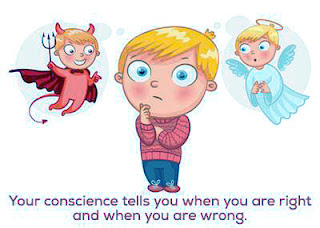
Conscience (மனசாட்சி) is just a mental conditioning. The knowledge gathered with our senses and the information processed and segregated as right and wrong forms this logical aspect called conscience. This is only existent as long as we are awake (ஜாக்கிரத நிலை). The moment we doze-off, it is dissolved and recrystallizes when awake again.

It is a very necessary one to co-exist amidst other beings. Conscience is the total humane factor of our being, but a very subjective one. Amongst tribes practicing cannibalism, killing another person does not cause any ripple in their conscience. Killing a cow doesn't bother a butcher. Robbing from meek doesn't bother many. Some even take pride in fooling naiveté and it doesn't interfere with their conscience anymore. So, conscience is very subjective and totally depends on the circumstances in which an individual is raised.

It is essential to understand that it is an ever evolving phenomena and is absolutely self made and re-moulded continuously. Conscience was programmed into a being to establish a better survival of their species and it had stayed the same in wild. When it came to the humans, it took several turns with evolution, as the exclusivity started shrinking their identity away from the species-level in the name of clan, creed, region, etc.

Hence, your conscience means nothing to the other, except for one vital aspect, that it helps the other to determine how much distance they are to maintain from you. Attaching anymore importance and advertising an individual conscience and adopting the conscience of a people we admire as our own are all unnecessary glorification of this transient malleable aspect which can as well be just a figment of our imagination.

Consciousness (சித்தம், chitham) is a subtle aspect of our being that is ever alert irrespective of our awake/asleep state. In sleep, even an habitual roller, doesn't roll off the boundaries of the bed. A totally asleep dog can be awakened by a simple change in direction of breeze. These aspects of the being is called consciousness. Considering the eyes, ears, skin, tastebuds, etc as switches that are turned off one by one when we start to fall asleep, consciousness is the last such switch that is not turned off in our regular day to day activities.

This consciousness (சித்தம், Chitta) is the foundation on which the so called mind (மனம்) , sense of judgement (புத்தி, budhi) and ego (அஹங்காரம், ahankaaram) are built on. These four parts are compositely called as Anthakaranam (அந்தக்கரணம்). This consciousness (chitham) is the result of all the undying education (சாகா கல்வி) obtained in its past forms and retained by the soul.
Consciousness is also the local store of all the karmic records of a being. Karmic records are all the incomplete transactions (desires, duties, curses and blessings) accumulated over a course of several lives that the being (soul) has taken.

The enlightened sages have further dwelled into these karmic records and categorized them as;

சஞ்சிதம் (sanchita karma) - The data lake of all the incomplete karmic transactions for each soul accumulated in several births are stored as sanchita karma. All these are in-store for the future births (forms).

பிராரத்வம் (praratva karma) - From the large dataset, a specific set of karmic records are hand picked by the soul (meaning ourselves) and we have taken this current human form to square-off exactly these records. It is to be noted, this set of records are always a mix of choices that bring both pleasant and unpleasant experiences.

ஆகமியம் (aagamiya karma) - While trying to square-off the praratva karma, we incur bits and pieces of more karma, which also needs to be squared-off in this life, if not, they get added back to the sanchita karma.

When someone is embarked on self-realization, they tend to be more aware of their actions. Slowly, but eventually they end up separating themselves from their own actions. This is the concise teaching of Bhagavat Gita.  At this point, one stops accumulating any more aagamiya karma and starts dissolving all their praratva karma at a faster pace. This is the exact reason why someone on spiritual progress often seem to be going through a lot more suffering in their life.

Pain in inevitable. Suffering is optional - Haruki Murakami

Realized beings, don't try to bypass this praratva karma because of their deep understanding and absolute knowledge that its their own choice and are in no way attached to this form (body) anymore to dodge such simple pains. This is the exact reason, why Ramana Maharishi or Ramakrishna Pramahamsa endured their cancers even though they were uber powerful and were curing other's ailments at the blink of an eye.

Unconditional service, heartfelt (in a trance emotional state) devotion,  yogic kriyas like kundalini awakening is said to burn away the karmas. This is emphasized in many cultures in several ways. This is absolutely true pertaining to the sanchita karma. i.e., The datastore of the karmic records, preserved for the future births starts dissolving fast with these acts. Especially in yogic way, when the yogi attains the breathless state of samadhi, all his sanchita karma dissolves rapidly and hence it is stated that this is their last birth and they don't have a need to come back again. Its only logical, as the sanchita karma is zeroed-out and nothing more to carve out a praratva, which is quintessential for taking another birth.

“Yogas chitta vritti nirodha" - Patanjali
(“Ceasing the fluctuations in consciousness is yoga”)

Worship - வழிபாடு

சைவ ஆகமம் (shaivism) provides a succinct encapsulation of different ways of worship, categorizing the ways of worship as generic as possible, without taking any sides with transient concepts like religion, caste, creed, nationality, age, education, etc.

1.) சரியை (sariya) "to intend" - worship with intent. mind-only phenomenon. Such as making a wish to their deity, in-heart prayer, listening to chants, taking part in a mass, observing a pooja, archana, yagna, etc. Basically, all the worships that doesn't explicitly involve any physical effort, but just mindful intent for spiritual progress is classified as சரியை.

2.) கிரியை (kriya) "to do" - worship with action. mind+body. Just praying doesn't satisfy everyone. There are people who need to work on their own in carving their progress. So they start taking physical efforts like chanting mantras, yogasana, pranayama and every other form of worship with explicit effort for spiritual progress is classified as Kriya.

Performing yagna, pooja, archana, fasting, pilgrimage, walking on fire chunks, rolling around the temple, nail-bed ritual and many such more, though need physical effort, their primary purpose is to strengthen the intention. Hence such practices are cusp of sariya and kriya. These practices are often backed up by indirect reasons and if not curbed, can potentially evolve into meaningless superstition, when the underlying space and time changes.

3.) யோகம் (yoga) "to join" - discarding both intent and action and just being a witness. This is shear observance, no chanting, no effort, no intent either. It is quite advanced and needs the basic understanding that we are a separate entity that is capable of observing our own body and mind as third parties. Mind, with years of habit, will kindle and bubble up all the incomplete thoughts that were garaged for a long time. Same with the body, it'll respond with pain, itch and a baseless compulsion to move. Normally, people lack the necessary understanding, strength and determination to observe these compulsions of mind and body as an outsider. Success in sariya and kriya will ensure this necessary strength is imbibed by the practitioner.

In the current times, the term yogasana was shrunk to "yoga" and catapulted to fame, though the meaning changes vastly with this shrinking. Yoga means "to join", while yogasana means "to perfect the seating posture". So, be aware not to mix this third stage of yoga with the body-bending asana's being practiced around the world as "yoga".

4.) ஞானம் (wisdom) - Attainment. This is not a way of worship, but the fruit and proof of success in spiritual progress. People who have attained this level invariably show a high level of clairvoyance, candor and composure. They exhibit a deeper knowledge on subjects involving cosmos and inner journey.

சரியை (sariya), கிரியை (kriya) & யோகம் (yoga) are not necessarily linear stairs to climb, but a logical path of a practioner. Sariya is introspection of principles (நாதம், சிவ தத்துவம்), while kriya needs energy (விந்து, சக்தி தத்துவம்) to do things. Obviously, one with already strengthened intent (sariya) will make the necessary attempt to take action (kriya). It will eventually lead to yoga (சிவசக்தி தத்துவம்), the combination of intent and action. When this yoga ripens, it blooms as ஞானம் (wisdom).

People have catapulted to wisdom directly from all of these three stages. Anandamayi Ma attained with strong sariya, Yogananda attained with explicit kriya and Vivekananda attained by direct yoga. They are neither fictional nor ancient historic figures, but people who lived amongst us in our generation and are photographed, recorded and captured in videos.

All the surrender oriented religious practices like praising and surrendering to krishna, shiva, jesus, allah, nanak, moses are all the way of sariya. For younger souls (சகலர்), their intent for spiritual progress is much weaker and this practice of sariya is often evangelized on them. Listening to the fictional stories on heroics and compassion of their deities, historic references, singing praises of object of their devotion are all intended to sow the seed and to nourish their intent to seek spiritual growth. Strong surrender dwindles the ego (ஆணவ மலம்) and hence their actions seizes to incur further karma (action-reaction-chain).

Patanjali's was predominantly the way of kriya. Kriya literally translates to "to do". All the yoga(asana) studios around the world are to explicitly take effort in spiritual evolution, which is the the essence of the way of kriya. By the time one is practicing the kriya, it is implied that their intent is already hardened. The one known pitfall of this path is, it often strengthens and polishes back the ego (ஆணவம்) of the practitioner. Hence, the need for a good guide to practice detached action and to constantly clip the sprouts of ego as they arise.

Buddha's preachings are the way of yogaVipassanā is a perfect example of pure observance without interference. Osho and J Krishnamurthy, contemporaries and despite their differences, were preaching the same way of yoga. To drop all the intent and action and just be a witness. In this stage, there are not shades of religion nor geographical boundaries. The practitioner transcends all such physical limitations. Monks of himalaya, tibet and zen and their followers do a combination of kriya and yoga to accelerate their attainment. Irrespective of the starting point, whether it is sariya or kriya, they eventually touch this yoga before attaining wisdom.

There are also combinations, Islam's way is combination of sariya and kriya; Zen is combination of kriya and yoga; Agoris, naga sadhus, rishis, siddhas and shaivites of himalayan and south-indian origin follow the combination of all three in their worship.

Shaivism also recognizes atheism as a perfectly acceptable way of worship. Buddha's preaching are absolutely atheistic as well. Atheists are often the ones who are not interested in believing but would rather quest to know the fact. This helps them climb the stairs much faster, detached. Biggest hurdle they would face is again the ego (ஆணவம்), which anyways starts dwindling once they attain the stage of true knowledge.

Every individual has the right to try several paths of their choice. A good society is one that grants and protects such individual rights. People (only the wise ones) can guide them to try some of the known paths, but with a clear understanding that it might not be suitable for that individual and ensure his/her options are kept open for further quest.

Māyā - Four Layers of Abstraction

Avidyā āsmitā rāga dveṣā bhiniveśāḥ pañca kleśāḥ - Patanjali
(Ignorance, ego, attachment, aversion and fear are 5 distractions)

Usefulness of a mall map amplifies drastically with a simple "you are here" mark. For those who embark on pursuit of who am i?, this write-up will provide the necessary guidelines to figure out where am i?

There are several layers of illusions and distraction keeps every individual from the path of realization. These are necessary layers to enrich each person with rich experiences and ripen them before they move up in the ladder of self-realization. These experiences, cheerful and dreary, hones everyone.

These four layers are most common applicable to everyone in current times.
1.) Economic conditioning - unknown entities controlling our thoughts and hence our actions.
2.) Social conditioning - people around directly or indirectly influencing our thoughts and decisions.
3.) Mind (thoughts and memories) - re-living past incidents or rehearsing a future prospect.
4.) Heart (emotions and feelings) - spontaneous outbursts in varying amplitude.

Economic conditioning could be considered the outermost layer as it is the most superficial and hence the most easiest to surpass, yet this is a very powerful layer. Basically, any unknown forces that influence masses for eventual economic benefit. The effect of it can seep till the heart. Example; flag, deity, celebrity, speech, book can trigger the intended emotion in masses as well as completely hijack our thought process.

The geo-political boundaries (countries), campaigned religions and all forms of controlled media are the direct outcome and prominent tools of this economic conditioning. A campaign like a beauty pageant is organized to sell cosmetics. Often, the miss world is chosen from a country which is identified as a new market to expand the cosmetic sales. When it comes to the movies and music, each decade, a specific theme is chosen to steer the thought process of masses in that direction. Like, population control(2020s), feminism(2010s), terrorism(2000s), global warming(1990s) and so on. While the intent behind this is debatable, there is an unanimous agreement that it is always backed by a definite economic benefit.

People in urban regions pretty much have no way to steer clear of this conditioning as they are the biggest contributors and consumers of the world economy. The privilege of experiencing and leveraging the technological advancement comes with this price. But to an astute observer, there is also another price the urban dwellers pay. i.e., compromised quality of essentials like sleep, air, water, food and real-emotions for the enormous choice in luxuries.

As we move rural, the impact of economic conditioning lessens. When it comes to secluded tribes, there are completely free from such conditioning. Like the aborigines of Australia, Amazonian tribes, Himalayan villages, etc. for the obvious reason.

Social conditioning is when the clan, ancestry, family, friends, colleagues or even a passer-by influences your thought and impact your decision. This varies drastically based on the personality. The stronger the will, self-esteem and awareness, lesser the impact. Unfortunately, a large bunch of us are extremely vulnerable to this social conditioning. It completely controls the clothing, language, etiquette, manners and choices of entertainment. These are created for social coherence, hence it is expected to be conditioned. But it also extends its influence to the individual aspects like the choice of food, shaping desires, driving ambitions and the aspect of righteousness.

Religious rituals, cultural ceremonies and even some of the day-to-day activities are direct outcome of this planned programming by the society. People were shaking hands to ensure there is no weapon hidden and ready to charge. Air kiss evolved to ensure the make-up is not disrupted. Hugging is a comforting gesture in cold countries as it warms each other. But, irrespective of their origin, we keep doing these things even now, though the context may not apply anymore.

There are also astutely engineered such habits, that are applicable and meaningful at all times. Bowing down to show respect is applicable everywhere. There is physical change in the blood flow in head that subdues any aggression, if present. Hand on eyebrows like a cap visor to focus on objects far away makes sense as it dilates the pupil which increases aperture of the eyes. Burning of old things at the beginning of a solar cycle, celebrated as bhogi in India and a similar ritual of eskimos, disposing all the inessentials at the beginning of every year are some of such meaningful conditioning.

Irrespective of its usefulness, there is nothing called a good habit. Habitual action and involuntary responses, without fundamental understanding and awareness will eventually lead to misery.

Mind is a overloaded term, hence there is a need to re-define it here. It is the active thoughts and the dormant memories collectively known as mind. Anyone who has attempted some form of meditation or even casually tried to look into their thoughts would have faced two major obstacles;
1.) Desires including but not limited to greed, lust, aspirations, seeking fame causing one to day-dream and rehearsing hypothetical situations in head.
2.) Mental wounds like insults, failures, inability to attain a desired thing, under-performance, losing something valuable causes people to re-live the past situations in head. This is often done to polish their self-image in their own thoughts.

These thought processes can be encapsulated as mind. It is the same mind with which we can see, listen, speak, taste, feel, walk, cook, drive and perform every day-to-day activity. As long as the thoughts are divulging outward, mind is the finest tool available. It helps us match patterns, derive mathematical models, observe cosmos and microns, understand physics, astronomy and constantly evolve. The same mind becomes the greatest obstacle when the thoughts turn inward. Basically, its starts to act like a child, constantly seeking attention. With constant awareness, this child can be tamed, but it needs the highest degree of patience.

Most of the meditators are struck in the clutches of the Mind. People rarely cross this layer. It either needs very strong will, cosmic influence, divine intervention or a combination of all these.

Heart is the next stop. I don't mean the physical beating heart inside the ribs. The feelings and emotions constitute the logical composition of heart. When the mind comes to halt during this inward journey, spontaneous outbursts of emotions like compassion, fear, anger, sorrow, empathy and bliss is experienced. These are mostly due to the bubbling up of submerged emotions in the subconsciousness. People in hypnosis and under the influence of the psychedelics exhibit the same symptoms, temporarily though. Mind clouds back as soon as they are out of the influence.

The blessed ones that go through these experience naturally, think they have already attained (self-awareness) and these are the fruits of attainment. Sometimes they even end up declaring to the world. It would be very pre-mature to do so.

This layer is similar to the layer of mind, but it is illogical in nature. Hence all the attempts to logically understand or attempt to steer it will be absolutely futile. Again, enormous patience and a super-human strong-will can get one past this. The blessing and guidance of someone who have already crossed this layer can help in transitioning with ease. The catch is, we can neither seek nor demand their help. It is always their choice. Making oneself eligible for them to choose us, is the only thing we can do.

Soul experience is very unique for every single soul. So there is nothing that can be said in general about it. By the time one reaches this state, they would have gone through several physical and hormonal changes which would have completely transformed them. Some of the common characteristics has been conspicuous clairvoyance, wholistic perspective, absolute clarity in communication, genuine candor, rock-steady composure and honest exhibit of emotions.

Virtues and Vices

Everyday we strive to be a better person. In that pursuit, we try to acquire as much knowledge and skill as we can. Succumbed to a commonly agreed upon measuring scale (wealth) to assess that growth. Hence acquired wealth is expressed with;
1.) Grooming, outfits and gadgets by youngsters
2.) Property, assets and investments by parents
3.) Social-welfare, soul-search and earth-consciousness by the grandparents.

Any parent who is still fond of grooming or gadgets and any youngster who is into soul-search are equally frowned upon by the society. While this child's play go on, irrespective of age and circumstances, here are some essential qualities for self-assessment to measure the real betterment;

யோக்கியம், loosely translates to Righteousness - This has nothing to do with the verbs and nouns set by the society. Categorizing people and acts as good and bad, hence everyone who sticks to good are righteous and not are otherwise is a big fallacy. righteous is an adjective and an adverb that can be used to qualify an attitude or an act.

Feeding the hunger is easy to understand, a righteous act. When a robber pickpockets a wallet, finds $40, takes $20 and puts the wallet back, it is also a righteous act. Now this the society won't accept. When a lion attacks a deer, finds its pregnant, lets the deer go, it is considered a noble act, but its just yet another righteous act as the pickpocket. The point is, there is no rigid way to qualify an act as righteousness. The exhaustive list of each and every act can be righteous, if done right. People who do that are righteous people (யோக்கியர்கள்).

Nature of a person doesn't translate to righteousness. An angry person can be righteous, composed can be vice, which is often the case. Impulsive or systematic doesn't define righteousness either. Unlike acts, its very complicated to define the righteousness in people unless one can sense beyond the superficial symptoms.

"தெய்வம் நீ என்று உணர்.. தெய்வமாய் பிறறை நேசி" திருமூலர்
(When you acknowledge the godliness in you.. you'll be able to recognize the godliness around)

தன்வயத்தம், Self-sustaining - It is just the ability to provide for self and reliant. Often misunderstood as secluding oneself into a remote hermitage. Absolutely not. self-sustaining is a term that can apply to a person, family, team, society, country or even the whole world inclusive. There no need to draw lines of exclusion here. Self-reliance comes from complete acceptance and complacency in life. The blind pursuit of wealth to attain self-reliance often ends in the exact opposite.

If one is repressing a desire to prove self-reliant, it will not end well either. When one inquires that desire, removing all the possible external influences and find that it hails from inside, the right thing is to pursue it. This kind of self-inquiry is not easy for a layman, but a second nature for an enlightened and those in pursuit of it. When one can live without comparing self to others, they are on the path of practicing self-reliance already.

A sheriff, who can maintain law and order in his town in all circumstances is a self-reliant cop. A group of people sharing the skills and produce, be content for the most part is a self sustaining society. A family grows the produce, cook their own food, take care of their shelter and recreation is a self-sustaining family. A monk in seclusion in harmony with existence is also self-reliant, it is nothing special or nobler than other exmples of self-reliance stated above.

"Things you own.. end up owning you" - Tyler Durden (Fight Club)

ஈகை, Generosity - A righteous and self-reliant person often has lesser needs and hence excess to share. When righteously earned wealth, skill or knowledge is shared with a deserving being, with absolute gratitude for the opportunity, it is a generous act. If any one of these three attribute is missing, the act isn't a generous one. Gratuity to a waiter, donating to save the face and giving in to the social customary and yearly charity seeking tax cuts does not fall under generosity.

"ஈதல் அறம்.. தீவினைவிட்டு ஈட்டல் பொருள்" - ஔவையார்
(sharing is an ethic.. and only morally pursuing the needs and wants is the meaning of life)

Generosity can neither be taught nor be practiced. Call it karmic records or genetics, one is either born with it or not. There is no point in pretending. If the compassion or empathy doesn't rise naturally, forcing it or pretending it causes more damage to the self.

"சித்திரமும் கைப்பழக்கம் செந்தமிழும் நாப்பழக்கம்..
நட்பும் தயையும் கொடையும் பிறவிக் குணம்" - ஔவையார் 
(friendship, compassion, generosity is innate by birth)

When you find these qualities in people around you, acknowledge, appreciate and be glad to have known them. DO NOT make the common mistake of impersonating them. If it is destined upon you, it'll manifest naturally, if not, go through the enriching experiences life throws at you undeterred.  It is essential for the right evolution. 

Being true to self is far more important than exhibiting any noble characteristic to the world.

Mindful Acts & Meditation

Be where you are, otherwise you will miss your life - Buddha

Mindful Action is when the thought doesn't drift away from the activity being performed.

Meditation is complete seizure of physical and mental activities.

Seizure of physical activities is pretty easy. In fact we do it everyday. During sleep, physical activities seize, yet, thousands of mental modifications goes on happening.

Bringing mental activities to a complete halt is not an easy feat. A significant number of people have embarked on this impossible journey of trying to shutdown their mind with brute force. Let me be the harbinger and break it to you; Just sitting down in meditative poses and expecting the mind to get to rest by itself is never going to happen. There is no Santa Claus. Drop this madness of sitting in padmasana without the necessary priming.

On the contrary, unleashing the mind and attaching it to a specific activity is quite easy. It is the core nature of mind - to cling. Practice of attaching the mind and body is mindful action. In plain language, doing something where all the thoughts are hovering around that task in hand is mindful action.

Dancers, singers, inventors, sportsperson naturally practice it everyday. When, Lionel Messi is dribbling the football past the opponents, does he think, "what is for dinner?" But a mailman's mind travel places while (s)he is driving the truck to deliver. This is the curse of any routine work. Once human mind recognizes a pattern and continues to perform the same task, the mind starts edging away from that repetitive action.

Hence, the routine workers are in dire need to find ways to explicitly bring the mind back to the body. As simple as, threading a needle, cutting vegetables to precision, shaping the beard with symmetry to making an impossible bottle are simple day to day tasks one can practice to keep the thought and action on the same thing for a specific span of time. Challenging self often and practicing new things every now and then, will continue closing the gap between mind (thought) and body (action). Basically, fill the evening hours with something interesting.

When these mindful actions fill the whole day,  the mind automatically seizes when body is at rest. Meditation sets in naturally.

pancha kośas - five sheaths of illusion

காணப்பா வின்னமய மாகி நின்று
கலந்துநின்ற புராணமய கோச மாச்சே
ஊணப்பா விக்யான மயமு மாகி
உத்தமனே மனோமயமாங் கோச மாச்சு

பூணப்பா ஆனந்த மயமு மாகப்
பொங்கிற்றே யஞ்சுதிறை போதத் துக்குத்
தோணப்பா திறையஞ்சு மாயை மாயை
சொல்லுகிறேன் சூட்சத்தைப் பூட்டிப் பாரே

- சட்டைமுனி (Sattaimuni)

(five layers of illusion in the name of body, breath, mind, wisdom, bliss - keeps one from realizing and manifesting the true nature of self)

Taittiriya Upanishad opened up the concept of Pancha kośas (கவசம்), five sheaths of illusion (maya) surrounding the soul (Atman). These five layers keep us, the humans engaged in multiple manifests of illusion. Due to this most of us never gets to experience the soul-self. Leave the experience apart, most go to an extent of even denying the existence of soul. But even those who deny the soul can understand, experience and hence cannot deny the existence of these sheaths.

Annamaya kosha - Annam means food, hence refers to the physical body that is nourished from intake. As obvious as it is, the physical body is the first layer of our existence. The body as such is utterly useless, which we must have realized by now, watching how soon people want to dispose a corpse.

Pranamaya kosha - Pranan translates to life-sustaining-breath. Breath gives life and hence a value to the body. It is also called as energy layer of the body. It is analogous to electricity, without which the device (body) is futile.

Manomaya kosha - Manam is mind. Collection of memories, senses and thoughts form this third layer of illusion. This is the key layer that limits the human experiences to the three dimensional plane and totally entraps our complete belief system to not venture beyond this. The concept of individual self, ego is the notorious child of this layer of illusion.

Vijnanamaya kosha - Vijnanam (விஞ்ஞானம்) is wisdom. The knowledge of beyond, things that are not in the experience of a common man forms this fourth layer. A person has to completely tame the aforementioned three layers and bring all those three outer layers (body, breath and mind) to a complete stand-still to gain access and experience this fourth layer of wisdom. All the forms of worship, rituals, yoga, meditation, mantra, tantra are all our attempts to gain access to this layer. Vijñāna Bhairava Tantra lists down 112 such ways to access this Vijnanamaya kosha and even goes to an extent to affirm that these are only 112 ways and none other.

Anandamaya kosha - Anandam means bliss. Allegedly this is layer of enlightenment. No one has ever been able to express the experience of this layer in any human perceivable form.

Once a person successfully traverses through these five veils of illusion undeterred and identifies the self with the soul, he or she is one with the divine.